

Why Rising Premiums, Marketplace Withdrawals, and Healthcare Inflation Demand a Different Approach to Employee Benefits
By Eric Culpepper
Healthcare Reform Expert | Executive Benefits Intelligence
In this article
- 1. The ACA's Affordability Problem Goes Beyond Premium Subsidies
- 2. Small Employers Face a Different Challenge Than Large Employers
- 3. Reference-Based Pricing: Addressing the Cost Structure Rather Than Just the Premium
- 4. Section 125: An Additional Layer of Employer and Employee Efficiency
- 5. Why the Traditional Centralized Benefits Model Deserves Another Look
- 6. The 2027 Market Should Prompt Employers to Reevaluate Their Strategy
- 7. Resources Available for Budget Oriented Employers
The Warning Signs Are Becoming Impossible to Ignore
The American healthcare insurance market is approaching another significant turning point.
As insurers prepare for the 2027 plan year, the Affordable Care Act (ACA) individual marketplaces are experiencing a combination of carrier withdrawals, substantial proposed premium increases, and growing uncertainty surrounding affordability for American families.
According to the Kaiser Family Foundation (KFF), insurers have proposed a median 15% premium increase for individual Marketplace coverage in 2027. This represents the second consecutive year of double-digit proposed increases. Additionally, as of October 28, 2026, eleven carriers had announced plans to exit at least some of their existing Marketplace markets for 2027.
These developments are not occurring in isolation.
The expiration of enhanced federal premium tax credits at the end of 2025, changes in Marketplace enrollment, and an increasingly expensive healthcare delivery system are creating additional financial pressures for insurers and consumers alike.
Insurers have identified several contributing factors:
- The expiration of enhanced federal premium tax credits.
- Changes in Marketplace enrollment and the health profile of the remaining insured population.
- Increasing hospital, physician, and other medical service prices.
- General economic inflation and healthcare labor costs.
- Higher utilization and the growing expense of specialty medications.
- Financial uncertainty surrounding participation in individual insurance markets.[1][2]
The consequences extend beyond individuals purchasing coverage through the ACA Marketplace.
Although individual Marketplace premiums and employer-sponsored group insurance operate under different insurance and regulatory structures, both are exposed to the same underlying healthcare delivery system and its escalating costs.
For business owners, CFOs, HR executives, and organizational decision-makers, this should prompt a much larger question:
How much longer can employers continue absorbing healthcare cost increases without examining the structure through which they purchase and administer employee benefits?
1. The ACA's Affordability Problem Goes Beyond Premium Subsidies
The expiration of enhanced premium tax credits has brought renewed attention to the financial relationship between federal subsidies, individual insurance premiums, and the number of people participating in the Marketplace.
However, the underlying problem is not exclusively a matter of government assistance.
As discussed in Transforming Benefits for Small and Large Employers, one of the fundamental weaknesses of the ACA was its emphasis on expanding insurance coverage without establishing a universal pricing framework for hospital and physician reimbursement.
Coverage expansion and healthcare cost containment are two different objectives.
The ACA expanded access to coverage, but it did not establish a universal Medicare-based reimbursement standard or impose a comprehensive ceiling on commercial hospital pricing.
Consequently, employers and insurers continue to operate within a healthcare marketplace where the cost of identical medical services can vary substantially depending on the provider, location, and negotiated contractual arrangements.
RAND Corporation's hospital price transparency research, referenced in the book, found that private insurers paid hospitals an average of approximately 224% of Medicare rates nationally in the study period examined.[4]
This raises an important question for employers:
If the underlying cost of medical services remains largely outside an employer's control, how effective can a traditional insurance renewal strategy really be?
The problem is that most employers are accustomed to evaluating their healthcare expenses through premium increases, carrier negotiations, and plan-design adjustments.
Those activities may influence the immediate financial arrangement, but they do not necessarily correct the underlying reimbursement structure driving healthcare expenditures.
In other words, negotiating a different insurance contract does not automatically mean the employer has achieved meaningful healthcare cost containment.
2. Small Employers Face a Different Challenge Than Large Employers
Although the 2027 Marketplace developments are receiving considerable attention, small and large employers face different challenges when determining how to respond.
Small employers: Affordability versus access to competitive benefits
Businesses with fewer than 50 full-time equivalent employees generally do not have the same ACA Employer Shared Responsibility obligations as applicable large employers.
However, their exemption does not protect them from rising healthcare costs.
Small businesses frequently face:
- Less negotiating leverage with traditional insurance carriers.
- Higher administrative costs relative to their employee population.
- Limited internal HR and compliance resources.
- Greater sensitivity to annual premium increases.
- Difficulty competing with larger organizations for employee recruitment and retention.
The book examines how certain employer-funded arrangements, particularly Qualified Small Employer HRAs (QSEHRAs) and Individual Coverage HRAs (ICHRAs), can create unintended financial consequences for employees who qualify for Marketplace premium tax credits.
A QSEHRA generally reduces an employee's available premium tax credit based on the applicable coordination rules. An affordable ICHRA offer generally makes an employee ineligible for a premium tax credit for the same coverage period.[5]
These distinctions become especially important when employees are already struggling with higher individual-market premiums.
For certain small employers, advisor-led Marketplace optimization may be worth evaluating, particularly when employees have varying household incomes and potential premium tax credit eligibility.
For businesses that want to sponsor a traditional employer group benefit, Reference-Based Pricing combined with Section 125 strategies represents another alternative worth examining.
The objective should be to preserve employee affordability while reducing unnecessary employer expense and administrative complexity.
Large employers: Compliance, volatility, and the limitations of traditional funding arrangements
Large employers face a different set of pressures.
Applicable Large Employers (ALEs) must navigate the ACA Employer Shared Responsibility provisions, including minimum essential coverage, affordability, minimum value, and applicable reporting requirements.
For these organizations, simply transitioning from a fully insured plan to a self-funded arrangement does not necessarily resolve healthcare cost escalation.
Self-funding can provide employers with greater visibility into claims activity, but visibility is not the same as pricing control.
As the book explains, conventional self-funded PPO arrangements can leave employers exposed to:
- Provider-determined reimbursement rates.
- Hospital consolidation and limited local competition.
- Increasing specialty drug expenditures.
- Claims volatility.
- Stop-loss renewal increases.
- Third-party administration and vendor expenses.
- Fiduciary and regulatory oversight responsibilities.[6]
An employer may gain access to detailed claims reports and still have little influence over the prices being paid for medical services.
That is a critical distinction.
The question is not simply whether an employer should self-fund. It is whether the employer has established a reimbursement structure that gives it meaningful influence over the cost of healthcare.
3. Reference-Based Pricing: Addressing the Cost Structure Rather Than Just the Premium
One of the principal strategies explored in Transforming Benefits for Small and Large Employers is Reference-Based Pricing (RBP).
Unlike traditional PPO arrangements that rely on negotiated contractual discounts, RBP establishes reimbursement using a defined reference point, commonly a percentage of Medicare reimbursement rates.
This creates a more transparent methodology for evaluating what the plan pays for medical services.
For example, rather than accepting an opaque negotiated hospital reimbursement arrangement, an employer can establish a defined reimbursement methodology tied to CMS Medicare benchmarks.
The distinction is important.
Traditional insurance arrangements often focus on negotiating discounts against provider-established prices. RBP introduces a different pricing framework that challenges the underlying reimbursement amount itself.[7]
The book identifies several potential advantages:
- Greater transparency into medical reimbursement.
- Reduced dependence on traditional carrier-negotiated pricing.
- More predictable reimbursement methodology.
- Opportunities to reduce excessive hospital claim payments.
- Greater control over long-term benefit cost exposure.
- The ability to pair RBP with self-funded plan structures.
For large employers, RBP can be integrated with self-funding, with the employer retaining responsibility for claims while stop-loss insurance provides protection against qualifying catastrophic losses.
In this arrangement, self-funding serves as the financial vehicle, while RBP serves as the reimbursement methodology.
This is an important distinction because conventional self-funding alone does not establish a universal reimbursement benchmark.
For smaller employers, RBP can provide an alternative to traditional fully insured group plans, subject to employee minimums, geographic provider conditions, and appropriate plan design.
The book also emphasizes that RBP is not a plug-and-play solution.
Employers must carefully evaluate provider acceptance, balance-billing protections, member advocacy, legal support, claims administration, stop-loss compatibility, and employee education before implementation.
A lower premium is not necessarily a better benefit if employees are left without adequate support when they need medical care.
4. Section 125: An Additional Layer of Employer and Employee Efficiency
Another important consideration is the integration of Section 125 cafeteria plans.
When appropriately structured, Section 125 arrangements can allow eligible employee contributions to be made on a pre-tax basis.
Depending on the employer's plan design, additional components may include:
- Premium-Only Plans (POP).
- Dependent Care Flexible Spending Accounts.
- Health Savings Account integration where permitted.
- Other qualified cafeteria-plan benefits.
When combined with an appropriate employer-sponsored RBP structure, these arrangements can provide additional payroll tax efficiencies while supporting a more flexible benefits strategy.[9]
This is particularly relevant to employers with multiple workforce classifications, different compensation levels, and employees distributed across several states.
Rather than assuming every employee must receive the same benefit structure, large employers can evaluate legally permissible benefit classes and contribution strategies while maintaining appropriate nondiscrimination and compliance safeguards.
For smaller employers, the opportunity is to develop a more affordable benefit structure without automatically accepting the financial limitations of traditional group insurance.
The objective is not to add more benefit products.
It is to create a more efficient benefits architecture.
5. Why the Traditional Centralized Benefits Model Deserves Another Look
There is another issue that often receives less attention than premiums: the cost and quality of benefits administration.
Employers frequently rely on multiple layers of centralized administration, including carriers, brokers, third-party administrators, enrollment vendors, compliance providers, and call-center support.
Although these services may be necessary, their organization and delivery can create additional costs, fragmented accountability, and unnecessary administrative complexity.
The book introduces a decentralized benefits service model that combines national infrastructure and oversight with local and regional advisor support.
The objective is straightforward:
- National-level compliance and technology infrastructure.
- Local-level employer relationships.
- Regional provider engagement.
- Personalized employee education.
- Responsive enrollment and ongoing support.
- Greater accountability for service delivery.
For small employers, this means having access to professional benefits guidance without maintaining an extensive internal HR infrastructure.
For large, multi-location employers, it means maintaining consistent benefit standards while providing support that recognizes regional provider markets and workforce differences.[10]
This becomes particularly important when introducing a nontraditional reimbursement methodology such as RBP.
The financial structure may control reimbursement, but the service structure determines how employees experience their benefits.
Both matter.
6. The 2027 Market Should Prompt Employers to Reevaluate Their Strategy
The ACA Marketplace developments should not be interpreted as proof that employer-sponsored insurance is collapsing or that every traditional carrier will withdraw from group insurance.
They do, however, illustrate the financial pressures affecting the broader healthcare marketplace.
The expiration of enhanced subsidies has changed the economics of individual coverage. Carrier withdrawals are reducing choices in certain markets. Meanwhile, underlying medical costs continue to place pressure on insurers, employers, and employees.
For employers, waiting until the next renewal notice to evaluate alternatives may be a costly approach.
A more effective strategy begins with understanding where the money is going.
Employers should consider evaluating:
- Historical premium escalation: What has the organization actually experienced over the previous three to five years?
- Administrative expenses: What are the direct and indirect costs associated with benefit administration?
- Reimbursement methodology: Are medical claims being paid against transparent benchmarks or opaque contractual arrangements?
- Employee affordability: Are employees receiving meaningful coverage at a reasonable financial commitment?
- Compliance exposure: Are the current arrangements creating avoidable reporting, documentation, or fiduciary responsibilities?
- Long-term sustainability: Will the existing structure remain financially viable over the next three to five years?
These questions are relevant regardless of whether an employer has 10 employees or 10,000.
The size of the organization changes the implementation strategy, but it does not change the importance of controlling the underlying cost structure.
The Bigger Question: Are Employers Buying Benefits, or Managing Healthcare Costs?
The 2027 healthcare insurance market presents an opportunity for employers to reconsider a fundamental assumption: that rising healthcare costs are simply an unavoidable annual expense of doing business.
There is a difference between purchasing insurance and establishing a sustainable benefits strategy.
Insurance transfers or finances certain risks. It does not automatically eliminate the underlying cost drivers.
As explored throughout Transforming Benefits for Small and Large Employers, employers need to examine the relationship between healthcare reimbursement, plan architecture, tax efficiency, compliance, and service delivery.
For some small employers, advisor-led Marketplace optimization may be the appropriate approach.
For others, an RBP group plan combined with Section 125 strategies may provide a more competitive alternative.
For large employers, RBP integrated with self-funding may offer a more disciplined approach to reimbursement and long-term cost governance, provided the organization has the appropriate administrative, financial, and employee-support infrastructure.
There is no universal solution for every workforce.
But there is a universal responsibility for business leadership: to understand what the organization is paying, why it is paying it, and whether a better structure exists.
The next generation of employee benefits will not be defined simply by which insurance carrier an employer selects. It will be defined by how effectively employers structure, finance, administer, and control the cost of healthcare.
The 2027 marketplace developments are another reminder that employers cannot afford to confuse the renewal of an insurance contract with the management of healthcare costs.
The time to examine the structure is before another renewal increase makes the decision for you.

Eric Culpepper is a healthcare reform expert, benefits industry leader, and author of Transforming Benefits for Small and Large Employers. He is the CEO and Principal Agent of Mid Michigan Health Insurance Advisors and the founder of the Insurance Agents United broker division. His work focuses on employer benefits architecture, healthcare cost containment, Reference-Based Pricing, regulatory considerations, and decentralized benefits administration.
His approach emphasizes education before engagement, structural analysis before product selection, and informed employer decision-making.
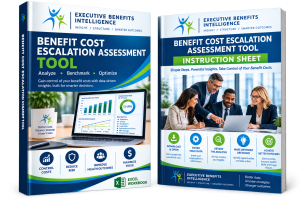
Additional Materials & Resources: Cost containment tools for budget oriented employers available below
Executive Benefits Intelligence | Transforming Benefits for Small and Large Employers available with DOWNLOAD
BE INFORMED, BE IN THE KNOW!
CONTACT US
Toll Free: 1 844 533-7432
Local Office: 1 (810) 471-4796
eric@mmhia.com
Headquarters
801 S Saginaw St
Flint, MI. 48502


